Self-storage facility lettings are standard-rated at 20% by statute. Not exempt. Not zero-rated. Standard-rated. The position has been settled UK law since 1 October 2012, when Finance Act 2012 Schedule 26 paragraphs 5(2) and 7(1) inserted paragraph (ka) into the Schedule 9 Group 1 Item 1 list of carve-outs from the exempt-land default. The verbatim text of the carve-out reads simply: 'the grant of facilities for the self storage of goods'.
The FA 2012 reform was a substantial change at the time and remains the operative position now. Commentary still framing self-storage as 'exempt land supply' is pre-FA-2012 stale; the standard-rated default has been live for over a decade. This page walks the statutory carve-out, the three narrow exceptions at Note (15C) that preserve exempt treatment, the operational implications for self-storage operators and for mixed-use landlords with self-storage tenants, the composite-or-multiple-supply analysis for bundled-service operators, and the Halford Industrial Estate apportionment worked example.
The Sch 9 Group 1 exempt-default position
VATA 1994 section 31 plus Schedule 9 Group 1 establishes that the grant of any interest in or right over land, or any licence to occupy land, is an exempt supply for VAT purposes. The exemption is subject to a list of carve-outs at Item 1 paragraphs (a) to (n) that revert specified supplies to standard-rated. The list includes 14 categories: holiday accommodation, parking facilities, hunting and shooting rights, sporting rights, mineral and timber extraction rights, betting and gaming venues, caravan pitches, seasonal tent and camping pitches, mooring and aircraft housing, boxes and seats at sporting and cultural venues, facilities for sport and physical recreation, safe-deposit facilities, self-storage (paragraph (ka)), advertising displays and installations, premium services in clubs and restaurants, and catering supplies related to the above.
Paragraph (ka) was inserted into this carve-out list by Finance Act 2012 Schedule 26 paragraphs 5(2) and 7(1) with effect from 1 October 2012. The insertion brought UK VAT treatment of self-storage into alignment with European VAT law that characterises self-storage as a service supply rather than a passive letting of land.
The paragraph (ka) carve-out verbatim
The verbatim text of paragraph (ka): 'the grant of facilities for the self storage of goods'. The provision is short and operationally clear. The grant of facilities means the supply of the storage space (a unit, locker, container, room) where the customer has rights of access and storage. 'Self storage of goods' means storage by the customer of the customer's own goods; the operator does not handle, sort, package, or otherwise process the goods. The operator's supply is the rental of the defined space and the related operational support (access systems, security, building maintenance).
The provision was drafted to capture the substance of the self-storage industry's offering: a serviced storage facility with customer-controlled storage activity, distinct from passive land lettings and from active handling services. HMRC's VAT Notice 742/1 (Self-storage) walks the operational application of paragraph (ka) with worked examples on container storage, locker storage, traditional self-storage facilities, and the boundary with warehousing services that are not within the carve-out.
What counts as 'self storage of goods'
Three operational categories are firmly within paragraph (ka):
- Traditional self-storage facilities. The Big Yellow, Safestore, Shurgard model: a purpose-built storage building with individual storage units of varying sizes (lockers, small rooms, large rooms, drive-up access) let to monthly customers. The customer accesses the unit, stores their own goods, retrieves goods at will. The operator provides the building, the security systems, the access controls, the climate where relevant, but does not handle the customer's goods.
- Container storage operators. Where the operator rents the storage site (often a former industrial yard), places storage containers on it, and sublets individual containers to customers on monthly terms. The customer has rights over the entire container, stores their own goods, and accesses the container during operational hours.
- Defined-space warehouse storage. Where a warehouse operator provides defined-space storage rights to customers (rather than bulk warehousing without space allocation). The customer has rights over a specific defined storage area; the supply is a paragraph (ka) self-storage supply.
Operations outside paragraph (ka): bulk warehousing without defined customer-space rights (typically a standard-rated service supply rather than paragraph (ka)); document-storage services that bundle records-management services beyond storage (composite analysis); cold-storage incidental to food-handling services (different supply category); furniture-removal operators using their vehicles as temporary storage during a moving job (the removal service is the dominant supply, storage is ancillary).
The three exceptions to standard-rated self-storage at Note (15C)
VATA 1994 Sch 9 Group 1 Note (15C) preserves exempt-land treatment in three narrow fact patterns:
- Connected-party supply with CGS adjustments running. Where the supply is between connected persons (the standard VAT connected-party definition) and the connected counterparty holds a relevant capital item with Capital Goods Scheme adjustments still running on the building, the standard-rated carve-out is itself disapplied and the supply reverts to exempt. The provision prevents the FA 2012 reform from triggering CGS clawback on connected-party supplies where both parties were operating under the pre-FA-2012 exempt regime. Operationally narrow.
- Charity non-business use. Where the recipient is a charity using the storage solely for non-business purposes (the charity is operating a community archive, a food bank, a refugee resource centre, or other genuinely non-business charitable activity), the supply remains exempt. The 'solely' qualifier is strict: any business use of the storage by the charity (charity-shop stock, paid-event materials, fundraising goods) disqualifies the exception.
- Ancillary storage within a wider building use. Where the storage element is ancillary to a wider supply (e.g. a tenanted commercial office with incidental storage cupboards rolled into the rent, or a hotel guest room with a complimentary luggage locker), the storage is not a separate paragraph (ka) supply but is part of the wider exempt or standard-rated supply.
Notes (15A), (15B), (15D), and (15E) of Schedule 9 Group 1 contain supporting definitions for these exceptions. Sessions advising on a specific supply should verify each exception's conditions against current text; the connected-party CGS exception in particular requires close fact-pattern matching.
Operational consequences for self-storage operators
The FA 2012 reform reshapes the operator's VAT position in two structural ways.
Output VAT on customer fees. Operators charge 20% VAT on storage rental fees from 1 October 2012. The 20% is added to the headline storage fee; the customer pays the full VAT-inclusive amount. Business customers (a small minority of the typical self-storage customer base) recover the VAT through their own VAT registration where they make taxable supplies. Domestic consumers (the majority) bear the VAT as an absolute cost; the headline storage fees increased by approximately 17% on the 2012 reform (the 20% addition divided by the pre-VAT-inclusive baseline, accounting for partial pre-reform output VAT under some structures).
Input-VAT recovery is now clean. Pre-FA-2012 operators using partial-exemption methodologies recovered input VAT on a restricted basis. Post-FA-2012 operators are fully taxable: all input VAT on operational costs (building maintenance, security, IT systems, marketing), property costs (rent on the operator's site, insurance, business rates), and capital expenditure (refurbishment, expansion) is recoverable in full. The Capital Goods Scheme overlay still applies on capital expenditure of £250,000 or more (a 10-interval adjustment period from the first interval of use), but the per-interval recovery is at the full 100% taxable-use rate.
The structural simplification of input recovery is one of the reform's net positives for the industry. The cost is the customer-facing 20% VAT impact, which raised market prices but did not materially shift demand because the entire industry repriced simultaneously.
Mixed-use landlord implications
A landlord with a multi-tenant building including a self-storage tenant faces multi-status VAT treatment. The self-storage portion is standard-rated by statute under paragraph (ka); other portions are exempt by default unless opted; residential portions are exempt regardless of any option.
Three operational implications:
- Apportionment of consideration. Where the landlord supplies multiple let elements to multiple tenants, the rental income is segmented by tenant. The self-storage tenant's rent is standard-rated; other tenants' rents follow their own supply categorisation.
- Apportionment of service-charge VAT. Where the landlord provides building-wide services (security, maintenance, insurance) recoverable from tenants via service charges, the service-charge VAT to the self-storage tenant is at 20% (input recoverable by the self-storage operator); the service-charge VAT to other tenants follows their own VAT status.
- Apportionment for partial exemption. Where the landlord has any exempt supplies in the building (e.g. unopted commercial tenant, residential tenant), the partial-exemption mechanic on residual building-wide costs applies. The self-storage tenant's standard-rated rent contributes to the taxable-supplies numerator in the partial-exemption ratio; the exempt portion is restricted.
Halford Industrial Estate worked example
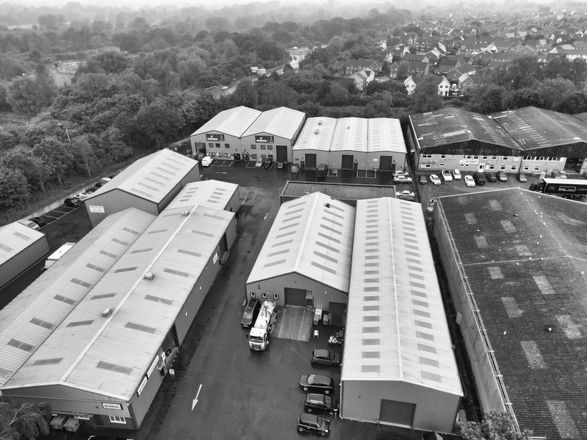
Halford Industrial Estate Limited (anonymised commercial landlord) owns a 40,000 sq ft multi-let industrial building in a UK regional city. The building is leased to four tenants:
| Tenant | Type | Floor area % | Annual rent | VAT treatment |
|---|---|---|---|---|
| Halifax Storage Solutions Ltd | Self-storage operator | 40% | £140,000 | 20% standard-rated under para (ka) |
| Carter Manufacturing Ltd | Conventional industrial tenant | 35% | £100,000 | 20% under landlord's option |
| Greene Imports Ltd | Conventional commercial tenant | 15% | £48,000 | 20% under landlord's option |
| Phelps Distributors Ltd | Conventional commercial tenant | 10% | £32,000 | 20% under landlord's option |
| Total | n/a | 100% | £320,000 | n/a |
The landlord has opted to tax the building under Schedule 10. Halifax Storage Solutions' rent is standard-rated by paragraph (ka) regardless (the option-to-tax is irrelevant on a paragraph (ka) supply). The other three tenants' rents are standard-rated under the landlord's option to tax. Total annual output VAT charged: 20% × £320,000 = £64,000.
Building-wide service-charge input VAT (insurance, security, repairs, building management): £40,000 per annum. The landlord recovers the £40,000 in full because all four tenants' supplies are taxable; no partial-exemption issue arises. The CGS overlay on the original building acquisition (assuming £250,000-plus capital expenditure) operates at the 100% taxable-use rate, with no clawback risk so long as the tenant mix remains taxable.
Comparison case. If Halford had instead let 40% of the building to a paragraph (ka)-exempt residential tenant (impossible on an industrial estate but illustrative), the residential portion would have been exempt and the landlord's input recovery on residual costs would have been restricted to 60% under the standard partial-exemption method. The 40% residential element would have produced £8,000 of recovery restriction on the £40,000 service-charge input VAT per annum. The paragraph (ka) self-storage tenant produces zero such restriction because the supply remains taxable.
Want this checked against your specific situation?
Leave your details and a one-line summary. A specialist will reply within 24 hours, with no obligation. Look out for our text, a quick reply confirms your callback.
Composite-or-multiple-supply analysis for bundled-service operators
A self-storage operator that bundles services with the storage (security monitoring, climate control, contents insurance, 24/7 access, packing supplies) is making either a composite single supply of paragraph (ka) standard-rated self-storage OR multiple separate supplies of standard-rated storage plus the additional services. The Card Protection Plan and Levob principles apply: where the additional services are 'so closely linked that they form, objectively, a single, indivisible economic supply', the supply is composite. Where the additional services have separate economic significance and the customer would reasonably consider them as separate, they may be separate supplies.
HMRC typically accepts composite single-supply treatment of standard self-storage packages bundling ordinary security and access. Separately-billed contents insurance is more commonly treated as a separate supply (insurance services are exempt under VATA 1994 Schedule 9 Group 2, so the analysis matters for partial-exemption purposes if the operator otherwise has only taxable supplies). Climate control and 24/7 access are typically composite with the storage.
The categorisation matters for VAT-rate purposes only at the margin; the dominant rate is 20% on the storage element. The composite analysis matters more for partial-exemption attribution where the operator has separately-charged elements at different rates, and for cross-border place-of-supply rules on multinational operations.
HMRC enquiry patterns and operator compliance posture
The FA 2012 reform has been settled law for over a decade, but HMRC enquiry territory still arises in several patterns. Three are operationally common.
Categorisation challenges on bulk-warehousing-versus-self-storage boundary. A warehouse operator that offers customers either defined-space rights (paragraph (ka) self-storage, standard-rated) or undefined bulk warehousing (different standard-rated supply category, also typically standard-rated but on different output-VAT analysis) may face HMRC categorisation review where the customer contracts are inconsistent or where the operator's commercial proposition straddles both models. The categorisation matters less for the output-VAT rate (both are typically 20%) and more for partial-exemption attribution and place-of-supply analysis on cross-border supplies.
Composite-versus-multiple supply enquiries on bundled-service operators. Operators bundling insurance, packing supplies, climate-controlled units, or 24/7 access into a single monthly fee may face HMRC enquiry into whether the bundle is a composite paragraph (ka) supply or multiple separate supplies. The economic significance of the additional services and the customer's reasonable perception are the determinative tests under Card Protection Plan and Levob; operators should document the supply structure and pricing in customer contracts to support the position.
Note (15C) exception claims. The three exceptions to paragraph (ka) are operationally narrow; operators or recipients claiming exempt treatment under any of the three are likely to face HMRC scrutiny of the qualifying conditions. The connected-party CGS exception requires documentary support that the connected counterparty holds the relevant capital item AND that CGS adjustments are still running; the charity non-business exception requires evidence that use is solely non-business; the ancillary-storage exception requires that the storage is genuinely subordinate to a wider supply.
Capital Goods Scheme on operator-owned buildings post-FA-2012
Operators that own their facilities outright (rather than leasing from a third-party landlord) sit inside the Capital Goods Scheme on any capital expenditure of £250,000 or more on the operator building. Pre-FA-2012, the CGS adjustment ran against the partial-exemption use position; post-FA-2012, the CGS adjustment runs against the 100% taxable-use position (because all customer supplies are now standard-rated under paragraph (ka)). Major refurbishments, expansions, or new-facility builds therefore now produce clean full-recovery on the input VAT, with subsequent CGS interval re-tests at the 100% rate provided the building continues to be used for self-storage supplies.
Three operational nuances. First, use changes during the CGS period that move the building toward non-self-storage exempt supplies (e.g. conversion of a self-storage facility into a residential building) trigger the standard CGS clawback mechanic on remaining intervals. Second, disposal of an operator-owned facility during the CGS adjustment period is itself a CGS event with a final disposal-year adjustment; where the disposal is to a buyer who will continue the self-storage business, TOGC treatment may be available under SI 1995/1268 Article 5 (the standard TOGC conditions plus the property-specific option-matching overlay where the building also includes opted commercial elements). Third, CGS interval adjustments are reported on the operator's longer-period VAT return; the position aligns with the operator's standard partial-exemption longer-period reconciliation even where partial exemption itself does not arise post-FA-2012.
Pre-FA-2012 transitional position and historical context
The FA 2012 reform took effect on 1 October 2012; pre-effect supplies were treated as exempt land supplies under the unrestricted Schedule 9 Group 1 Item 1. The transitional position was set out in FA 2012 Schedule 26 paragraph 7 and gave operators a defined-grace period to restructure their VAT positions. Three transitional points were operationally significant at the time.
First, operators that had opted to tax their operator-owned buildings under Schedule 10 had typically structured to recover input VAT on building investment via the option, with the standard-rated services they also supplied (boxes, packing materials, insurance) producing partial taxable supplies. The FA 2012 reform shifted the entire storage supply to standard-rated, eliminating the partial-exemption complexity at the cost of greater customer-facing VAT.
Second, the Capital Goods Scheme position on operator-owned buildings rebased on the FA 2012 effective date. CGS adjustment periods that had been running on a partial-exemption basis re-tested at the first interval after 1 October 2012 on the new 100% taxable-use rate; the resulting positive adjustment (additional input-VAT recovery) was operationally welcome for operators with substantial residual CGS periods remaining.
Third, customer contracts in existence at 1 October 2012 frequently did not contemplate the VAT change; operators had to either absorb the 20% on the existing-contract pricing or pass it through under VAT-variation clauses in customer terms. The industry-wide repricing happened over the 6 to 12 months following the reform, with the standard-rated treatment fully embedded by mid-2013.
For sessions reviewing legacy operator-acquisition documentation or legacy customer disputes from pre-2013, the transitional rules in FA 2012 Schedule 26 paragraph 7 remain operationally relevant. For all post-2013 activity, paragraph (ka) is the operative provision and the pre-FA-2012 framing is purely historical.
Related reading
- Option to tax framework pillar (C1)
- VAT partial exemption special method (C5)
- VAT partial exemption standard method (Wave 5)
- VAT on mixed-use property purchase apportionment
- VAT option to tax mechanics (Wave 5)
Authorities
- VATA 1994 Sch 9 Group 1 (exempt land + carve-outs, including paragraph (ka) self-storage)
- FA 2012 Sch 26 paragraphs 5(2) and 7(1) (inserting paragraph (ka) effective 1 October 2012)
- VATA 1994 Sch 4A (place of supply, services connected with immoveable property)
- HMRC VAT Notice 742/1: Self-storage
- HMRC VAT Notice 742: Land and property
- HMRC VAT Land and Property internal manual (VATLP)
- HMRC VAT Supply and Consideration internal manual (composite-vs-multiple-supply guidance)